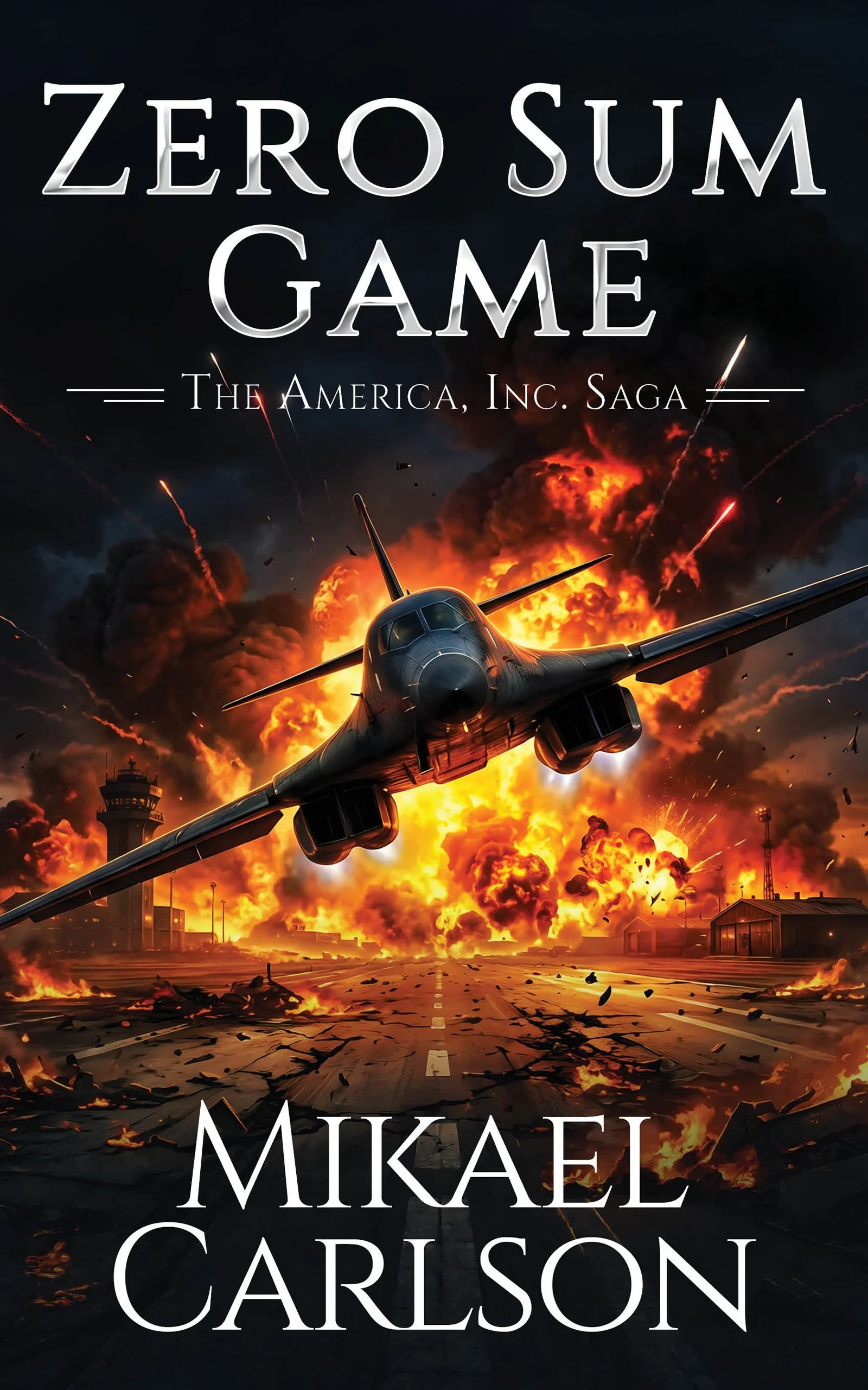
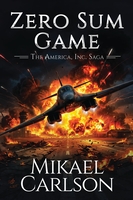
ZERO SUM GAME
THE AMERICA, INC. SAGA
BOOK 5
In a zero-sum world, victory demands sacrifice.

Published by Warrington Publishing
View official publication details, editions, awards, ISBNs and retailer information by clicking the link below:
| Book Snapshot | |
|---|---|
| Series | America, Inc. Saga |
| Series Position | Book 5 (Penultimate Novel) |
| Genre | Dystopian Thriller / Political Thriller |
| Publication | October 6, 2026 |
| Author | Mikael Carlson |
| Publisher | Warrington Publishing |
| America, Inc. Saga — Reading Order | ||
|---|---|---|
| Book | Title | Status |
| 1 | The Black Swan Event | Available Now |
| 2 | Bounded Rationality | Available Now |
| 3 | Boiling the Ocean | Available Now |
| 4 | Caveat Emptor | Available Now |
| 5 | Zero Sum Game | Available Now |
| 6 | Paradigm Shift | Forthcoming |
AUDIOBOOK
Coming Soon!
Short Description
America Incorporated is joining every other corporation in the world in unraveling. The financial markets have gone dark, New York City is in open rebellion, and a vicious power struggle between the corporation's Board of Directors and its Chief Executive threatens to destroy the corporate state from within.
Rykos and Liberteum continue their struggle for freedom while executives, security leaders, patricians, and political power brokers maneuver for control. At the same time, rival powers beyond America Incorporated begin exploiting the chaos, bringing the world closer to a much larger conflict.
Genre
Zero Sum Game is best classified as a dystopian political thriller. It also fits several closely related subgenres: speculative fiction, political science fiction, techno-thriller, military/action thriller, and corporate dystopia. It captures both the America, Inc. world and the book’s central conflict over corporate power, rebellion, financial control, and political survival.
Inspiration
The inspiration for Zero Sum Game grew from the idea that destroying an established order is only the beginning. Once corporate rule begins to collapse, someone must decide what replaces it. I wanted to explore a world in which surviving governments, corporations, revolutionaries, and military forces all believe they deserve to shape humanity’s future, even though no faction has a monopoly on virtue. Each group views its own survival as essential, but their competing ambitions raise a larger question: If everyone believes victory requires someone else’s defeat, can anyone truly win?
As the penultimate installment in the America, Inc. Saga, Zero Sum Game brings together the political intrigue, corporate conspiracies, military conflict, revolution, and shifting alliances that have developed throughout the series. It also represents the culmination of much of Rykos’ transformation from a privileged student into an active participant in the struggle for humanity’s future. I wanted the novel to move every surviving faction toward the final confrontation in Paradigm Shift while asking what may be the saga’s most consequential question: When someone finally wins this zero-sum struggle, what will be left for them to rule?
Behind the Book: Zero Sum Game
A zero-sum game is a situation in which one side can gain only if another side loses. By this point in the series, nearly every faction views the conflict that way. The title reflects the worldview of the people fighting to preserve their power. They would rather destroy the system than allow someone else to control it.
This is the penultimate novel in the America, Inc. Saga, so I wanted it to feel like the moment when every simmering conflict finally erupts. That inspiration came from the penultimate episodes in every season of Game of Thrones.
The crisis in Manhattan, the closure of the markets, and the absence of reliable information show how quickly a supposedly sophisticated society can begin to unravel. Institutions and systems are far more fragile than we realize.
The BCS may describe its enemies as terrorists, but labels in this world are usually chosen by whoever controls the official narrative.
Virtari’s willingness to burn everything rather than surrender power is an extreme expression of the zero-sum mentality at the heart of the novel.
The Patricians built a world that insulated them from consequences. The events of this book force them to confront the possibility that their protection is disappearing. This is inspired through year of watching celebrities and some members of society’s billionaire class.
Rykos is no longer the young registrant simply trying to survive. His decisions now carry consequences for people and institutions throughout the corporate world. It’s derived from the classic hero’s journey, although I am not sure I would characterize him as a traditional hero.
I wanted the global instability to feel connected rather than coincidental. The collapse of one corporation can destabilize markets, governments, and alliances everywhere.
The story explores how quickly allies can become rivals, and vice-versa. There is an old expression that says “politics makes for strange bedfellows.” This is an extension of that axiom.
Love, friendship, and loyalty become acts of defiance in a society that treats every human interaction as an exchange. Fiolla and Michele may be the best example of this. The two women have a lot in common but grew up and operated in very different worlds. They have no business being friends, yet they are.
Several characters believe that winning will justify whatever they do along the way. The novel asks whether victory still matters if nothing worth saving survives.
The scope may be global, but I tried to keep the emotional stakes personal. The fate of the world matters because of the people forced to live in it.
Zero Sum Game drives the saga toward Paradigm Shift, where the surviving characters must decide whether they will rebuild the old system or imagine something fundamentally different. The bigger question that needs to be answered is whether the people of the world are ready for that change.
Frequently Asked Questions
-
Rykos is no longer the privileged registrant who complained about the corporate system without knowing what to do about it. He has become a mediator, organizer, and, most importantly, a voice capable of explaining why the existing system must change.
One of the clearest examples comes when competing factions in Manhattan cannot agree on how to govern. Rather than demanding ideological purity, Rykos argues for compromise, recognizing that excessive punishment will create resentment while excessive leniency will invite more chaos. He has evolved from critic to leader.
-
Their relationship has matured beyond attraction. Michele now knows that she loves Rykos, while Rykos continues fulfilling the role she and her father originally envisioned for him.
The important difference is that he is no longer doing it simply because Michele needs him. He genuinely believes in the principles he is advocating. His actions increasingly represent his own convictions rather than loyalty to Liberteum.
When Michele watches his AME News broadcast, she recognizes that he has finally become the messenger Quarren hoped he would become.
-
They are allies who still do not completely trust each other and both care deeply about Rykos. That creates one of the novel's more personal conflicts. Ilaria fears that Michele's cause is putting her son in danger, while Michele believes Ilaria is struggling to accept that Rykos is an adult making his own decisions.
Their argument becomes particularly heated when Ilaria accuses Michele of caring about Rykos only when he is useful to Liberteum. Michele's response makes clear that her feelings for him extend well beyond the revolution.
-
Yes, although that respect develops reluctantly. Ilaria has spent most of her life being told that Liberteum consists of terrorists. Michele kidnapped her son, and Liberteum fought the PSS commanded by her husband. Those memories cannot simply disappear.
But Ilaria also sees Michele's courage, intelligence, and loyalty. More importantly, both women increasingly understand that their survival depends upon cooperation. Their relationship reflects one of the saga's larger ideas: alliances do not require people to forget the past—they require them to recognize when the future matters more.
-
It transforms the global political struggle into a father-son conflict. Denali expected Farron to inherit his worldview and eventually his power. Instead, Farron's relationships with Michele, Fiolla, Rykos, and others force him to recognize what his father's plans actually mean for ordinary people.
Denali eventually becomes willing to have his own son killed rather than permit Farron to interfere with his ambitions. For Farron, stopping Denali is no longer merely about saving the world. It is about accepting responsibility for opposing the man who raised him.
-
Because Rykos finally completes the mission Quarren and Michele envisioned for him. Liberteum can sabotage infrastructure, seize financial systems, and fight security forces, but none of those actions can make people believe in a different future.
Rykos can.
During the broadcast, he argues that corporations taught generations of people to fear freedom and accept obedience as the price of security. His message is dangerous precisely because it is not a military attack—it challenges the legitimacy of the entire corporate system.
-
Because Rykos is attacking belief. Virtari understands that corporations survive not merely because they possess security forces and economic power, but because employees accept the system as necessary.
Rykos threatens that assumption. A bomb can destroy a building. A persuasive idea can convince millions of people that the institution controlling their lives no longer deserves their obedience.
-
The scene demonstrates that Denali's relationship with the other patricians was never an alliance among equals. When members of the elite attempt to push him aside, Denali activates a plan already prepared against them. The word “Excalibur” signals that the power struggle is over because Denali has already placed himself in a position to eliminate those who oppose him.
It reinforces one of the novel's recurring lessons: anyone who believes he is merely another player on Denali's chessboard has misunderstood the game.
-
Because she understands power primarily through winners and losers. When her authority is challenged, she does not search for a way to accommodate the board. She concludes that if they prevent her from winning, they must be removed. That mindset perfectly captures the book's title: compromise becomes weakness because someone else's success is automatically interpreted as your defeat.
Main Characters in Zero Sum Game
-
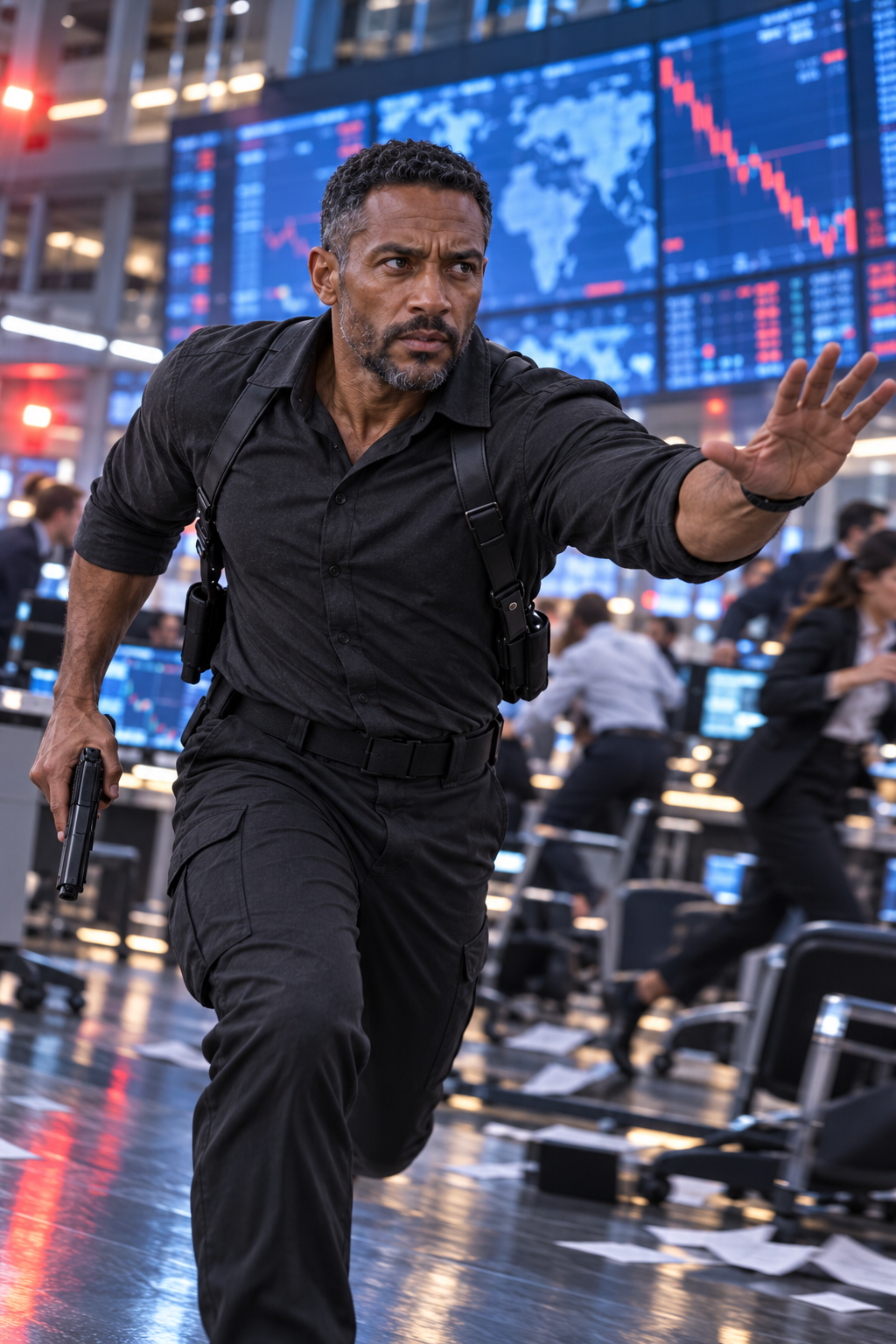
ZYREE
Former Intercorpex Chief Inspector
-
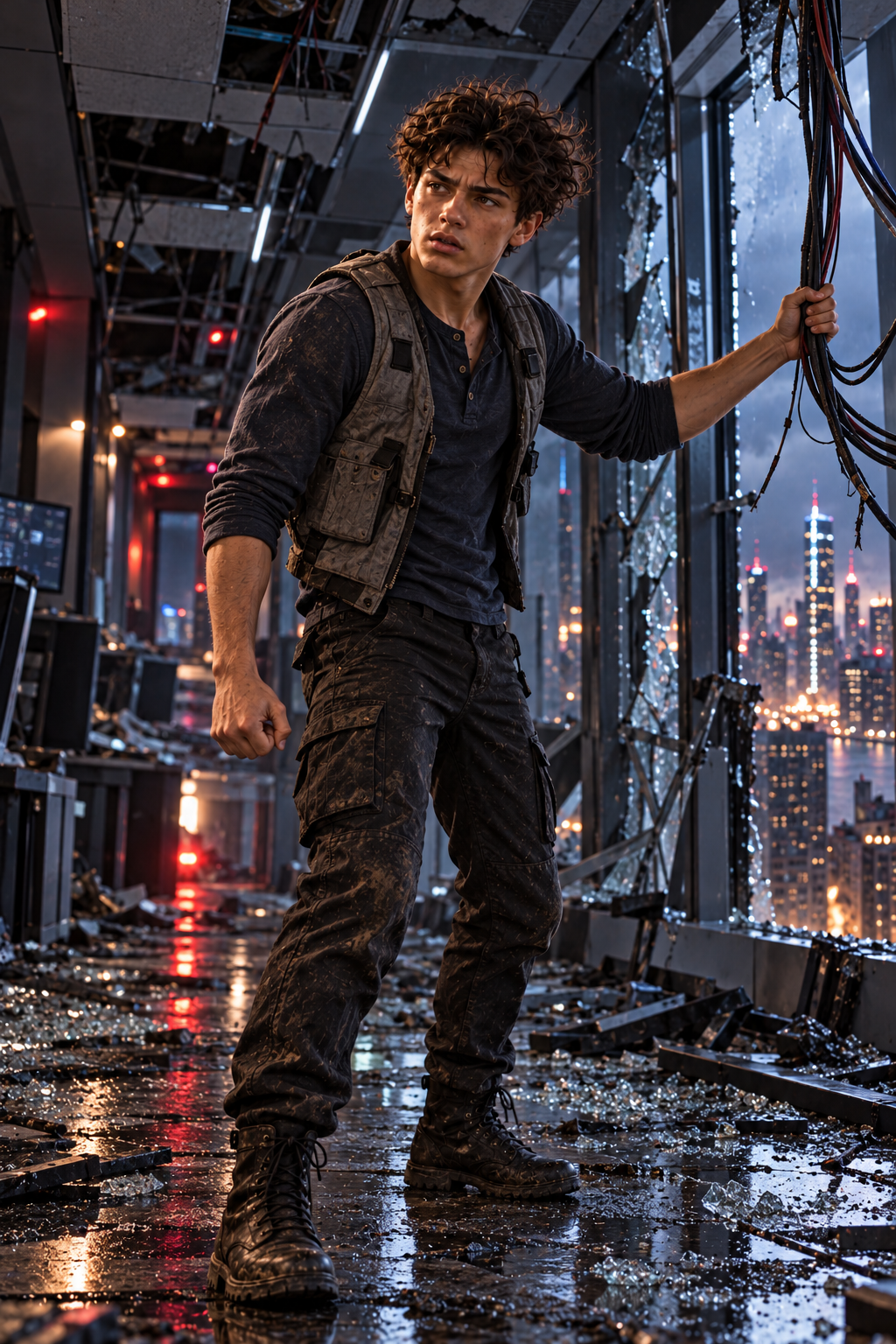
RYKOS
NYCMC Resistance
-
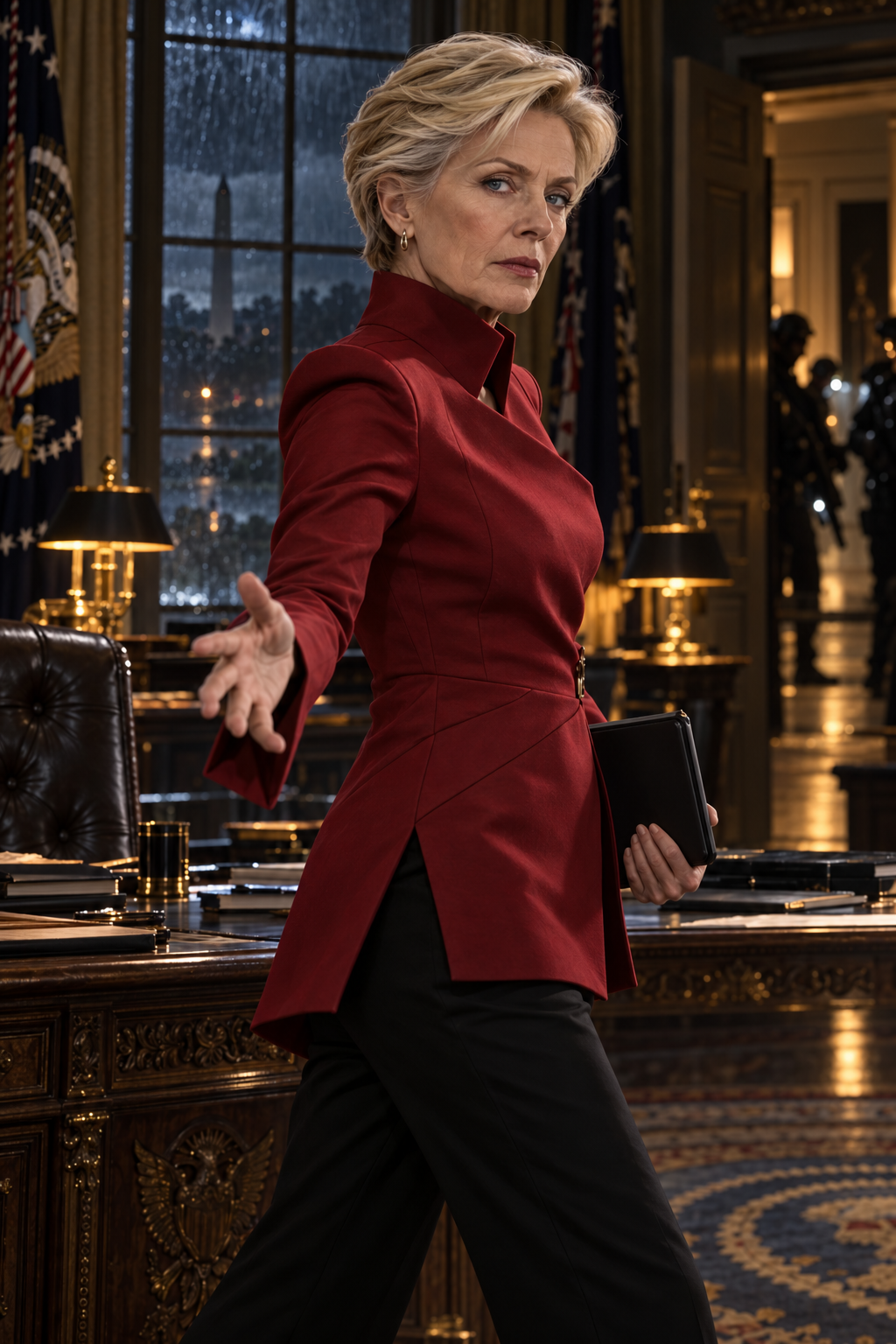
ZEYKALA
Chief Executive Officer, America, Inc.
-
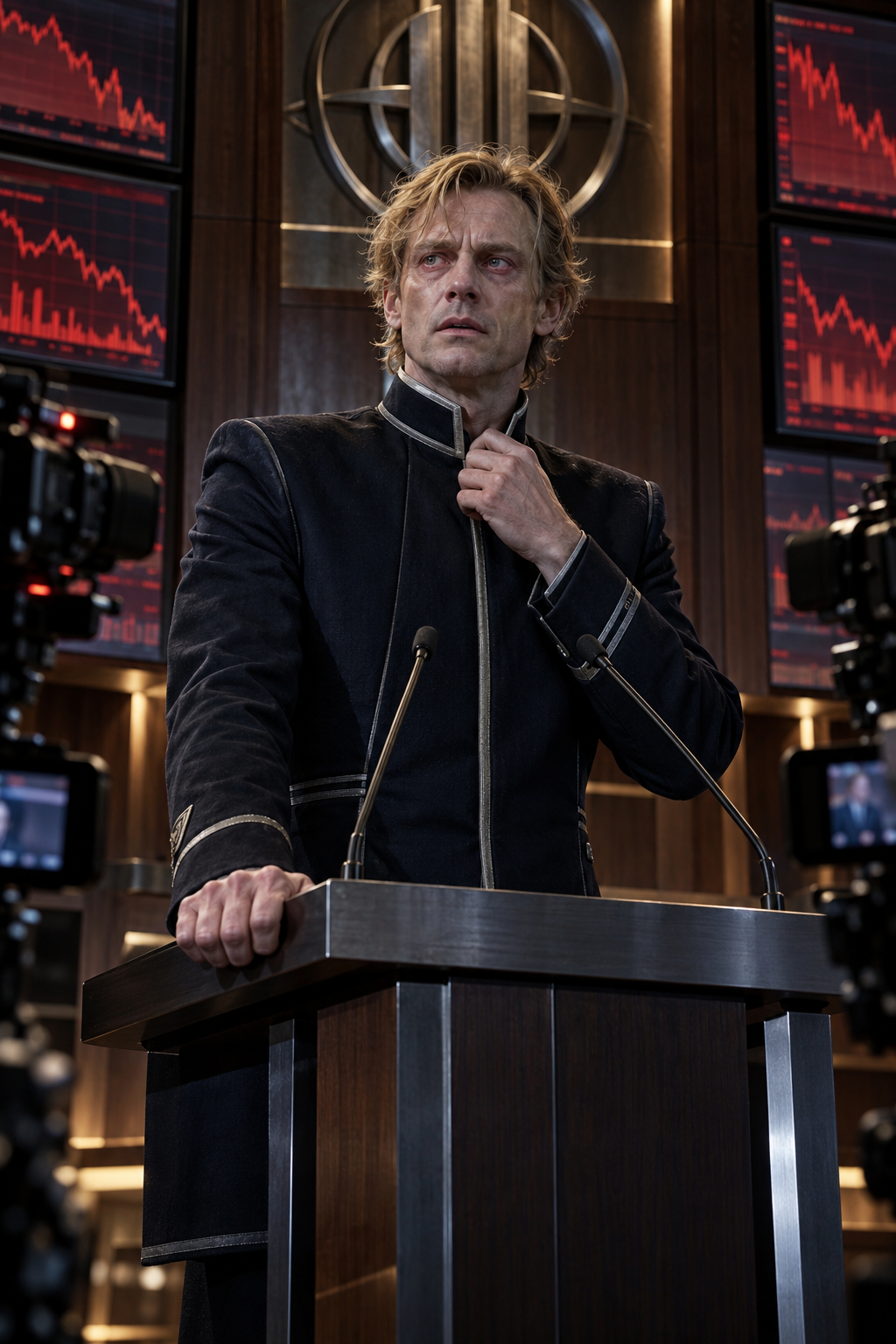
LYRIS
Administrator-General of Intercorpex
-
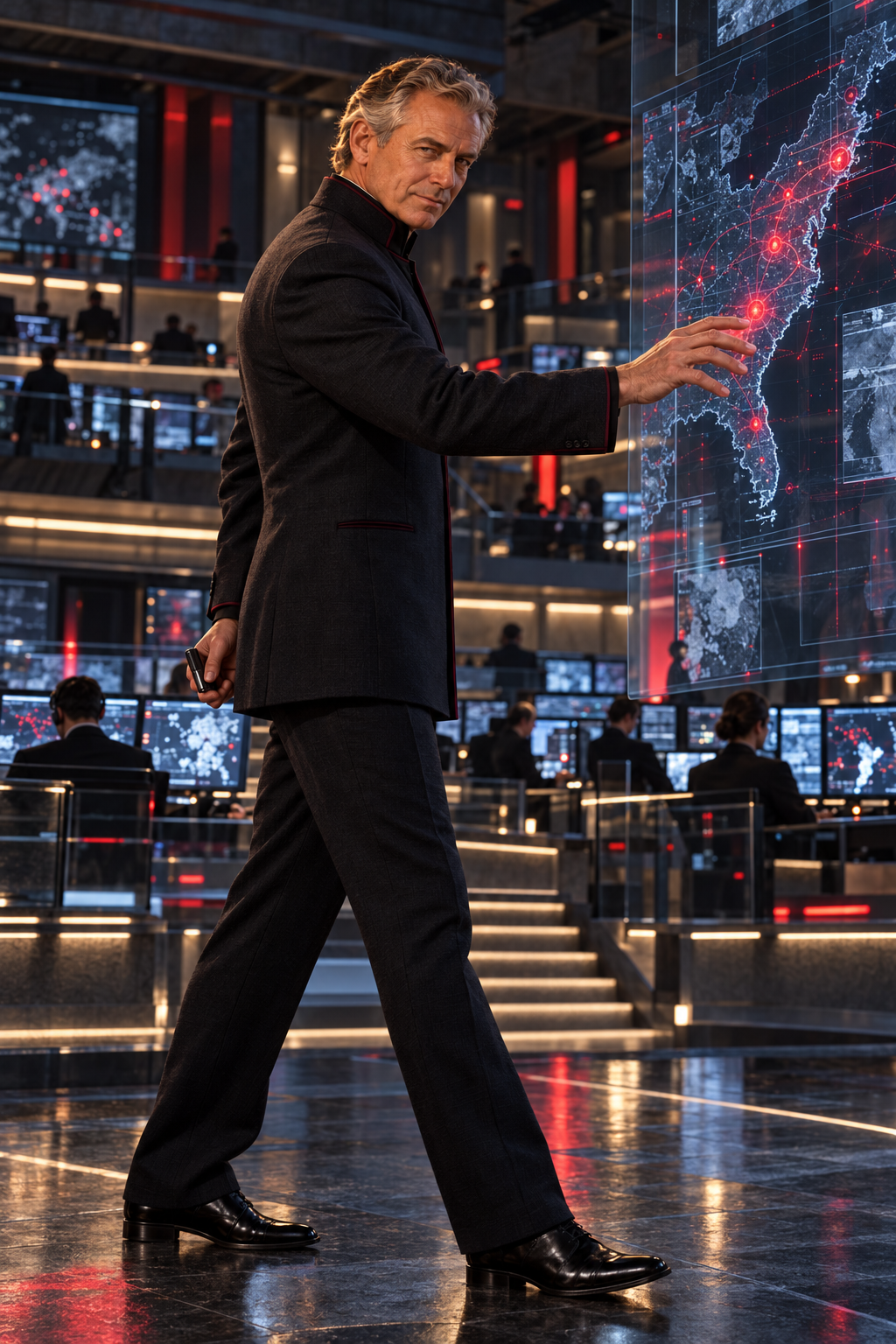
DENALI KEATING
Patrician of the Gentez-Majorez
Books in The America, Inc. Saga
-

THE BLACK SWAN EVENT
BOOK 1
-

BOUNDED RATIONALITY
BOOK 2
-

BOILING THE OCEAN
BOOK 3
-

CAVEAT EMPTOR
BOOK 4
-
ZERO SUM GAME
BOOK 5